


Ever thought about how families handle estate management without getting lost in legal issues? Trust administration attorneys are the heroes who make estate settlements smooth and organized.
When someone dies or can’t make decisions, trust administration is key. These lawyers help families follow legal steps. They make sure assets go to the right people, as the person who set up the trust wanted.
Trust administration attorneys offer big help during tough times. They teach trustees about their duties. They also help manage assets and avoid fights among family members.
Key Takeaways
- Trust administration attorneys simplify estate management
- Professional guidance prevents legal complications
- Proper trust administration protects family legacies
- Attorneys ensure compliance with state and federal laws
- Strategic legal support minimizes possible disputes
Understanding Trust Administration
Trust administration is a key legal process. It helps families manage and share assets after someone dies. Estate planning lawyers guide families through this complex journey. They make sure trust assets are handled with care.
The legal side of trust administration is complex. It needs special knowledge and a strategic plan. Getting help from a successor trustee is very important. They help with the many tasks and challenges that come up.
What is Trust Administration?
Trust administration means managing a trust’s assets as the grantor wished. It’s different from probate because it offers benefits:
- It keeps family matters private
- It distributes assets faster
- It costs less in legal fees
- It lets you manage assets more flexibly
The Role of a Trust Administration Attorney
Professional estate planning lawyers are key in trust administration. They do many important things:
- They understand complex trust documents
- They advise trustees on their duties
- They make sure everything is done legally
- They handle tax filings
- They help transfer assets smoothly
The Importance of Legal Guidance
Trying to manage trust administration alone can be risky. Experienced attorneys offer a vital guide. They help trustees know their duties and avoid legal problems. This can prevent personal liability or family fights.
Types of Trusts in Estate Planning
Estate planning is about making smart choices to protect and share your assets. Knowing about different trusts helps you make a solid plan for your family’s future.
Revocable trusts let you manage your assets while you’re alive. They give you control and prepare for what might happen later.
Revocable vs. Irrevocable Trusts
Revocable and irrevocable trusts differ in how you can change them:
- Revocable trusts can be changed or canceled by you
- Irrevocable trusts can’t be changed once set up
- Revocable trusts give you more control while you’re alive
Special Needs Trusts
Special needs trusts help people with disabilities by:
- Keeping them eligible for government help
- Providing extra money for needs
- Helping with long-term care without losing benefits
Charitable Trusts
Charitable trusts let you give to causes you care about and might get tax breaks. They help you make a big difference through smart planning.
Choosing the right trust needs careful thought and help from experts. This ensures your trust works well with your financial goals.
Responsibilities of Trust Administration Attorneys
Trust administration attorneys handle complex legal and financial tasks. They act as key advisors, helping with estate settlement. They also protect the rights of both trustees and beneficiaries.
Comprehensive Asset Assessment
Managing trust assets starts with a detailed check of everything. Attorneys carefully look at:
- Real estate properties
- Bank and investment accounts
- Retirement plans
- Business interests
- Personal property
Transparent Beneficiary Communication
Good communication is key in trust management. Attorneys give clear updates to beneficiaries. They explain:
- When things will happen
- When they will get their money
- Any possible problems
- What laws apply
Complex Tax Filing Requirements
Taxes are a big part of trust management. Attorneys handle important tax papers, like:
- The last tax return of the person who died
- Tax returns for the person managing the trust
- Checks on estate and gift taxes
- Working with certified public accountants
With their knowledge, these attorneys make sure everything is done right. They help keep taxes low and make sure money gets to the right people.
The Trust Administration Process
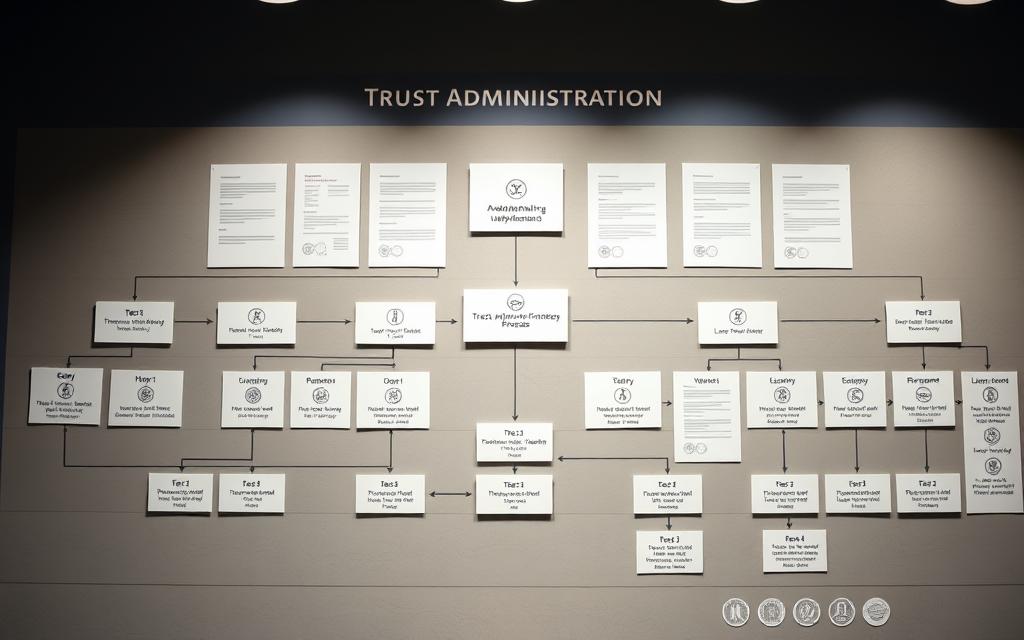
Going through the trust administration process needs careful planning. A trust distribution lawyer helps a lot. They guide executors and trustees through it. Knowing the steps helps make sure everything goes smoothly and follows the law.
Initial Steps After the Grantor’s Passing
Right after the grantor dies, the trust administration starts. Important first steps include:
- Get many certified death certificates
- Find the original trust document and any changes
- Lock up trust property and change locks if needed
- Tell banks and other important people
- Make sure mail goes to the right place and keep it safe
Inventorying and Valuing Trust Assets
Listing all trust assets is key. A trust distribution lawyer helps with:
- Make a full list of trust assets
- Get expert appraisals for real estate
- Find out the value of financial accounts at the time of death
- Record the value of personal items
- Keep good records for taxes
Distributing Assets to Beneficiaries
The last step is giving out the assets. Trustees must check who the beneficiaries are, figure out how much each gets, and follow the law. Having a trust distribution lawyer helps protect trustees and makes sure the grantor’s wishes are carried out.
Trust administration needs patience, careful work, and expert help. By following a clear plan, trustees can handle this complex task well. This brings peace of mind to the people who benefit from the trust.
Common Challenges in Trust Administration
Trust administration is complex. It involves legal and personal issues. Trustees face many challenges that can make settling the estate hard. Knowing these challenges helps everyone prepare for problems in trust disputes.
Disputes Among Beneficiaries
Family fights can stop trust administration. Disagreements come from:
- Unclear instructions on who gets what
- Feeling treated unfairly
- Not trusting the trustee’s choices
- Different money expectations
Fixing these disputes needs clear talk and help from experts. Lawyers are key in keeping things calm and stopping fights.
Tax Complications
Taxes can be a big problem in trust administration. Issues include:
| Tax Challenge | Potential Consequence |
|---|---|
| Missing tax filing deadlines | Big penalties |
| Valuing assets wrong | Risk of audits |
| Choosing the wrong tax options | More taxes owed |
Legal Compliance Issues
Trustees must follow the law to avoid trouble. Trust dispute resolution often deals with:
- Following the trust document exactly
- Handling creditor claims right
- Keeping up with fiduciary duties
- Following state laws
Getting help from a lawyer is key. It helps avoid problems and makes trust administration smoother.
How to Choose the Right Trust Administration Attorney
Choosing the right trust administration attorney is very important. They help make sure everything goes smoothly with an estate. They guide you through tough legal stuff and protect your interests.
Looking for the right trust administration attorney takes some work. You need to look for certain qualities. These qualities show if a lawyer is good at handling estates.
Key Qualities to Seek
- Specialized knowledge in trust and estate law
- Extensive experience with trust administration
- Strong communication skills
- Proven track record of successful estate settlements
- Deep understanding of local legal requirements
Essential Consultation Questions
When you meet with lawyers, have a list of questions ready. This helps you figure out if they’re right for you:
- How many trust administrations have you managed?
- What is your specific expertise in our type of trust?
- What are your fee structures?
- What challenges might we face?
Evaluating Professional Expertise
| Evaluation Criteria | What to Look For |
|---|---|
| Educational Background | Advanced degrees in estate planning law |
| Professional Certifications | Estate planning board certification |
| Professional Memberships | State and national estate planning associations |
Trust administration attorneys are key in dealing with legal issues. Doing your homework and picking wisely can greatly improve how smoothly an estate is settled.
The Costs of Hiring Trust Administration Attorneys
Understanding the costs of trust administration is key. Estate planning lawyers help a lot. But knowing how they charge is important for everyone involved.
Hourly Rates vs. Flat Fees: Understanding Your Options
Estate planning lawyers charge in two main ways:
- Hourly Rates: Most charge between $250 and $500 per hour
- Flat Fees: Some offer fixed prices for simple cases
| Fee Structure | Pros | Cons |
|---|---|---|
| Hourly Rates | Flexibility for complex cases | Potentially unpredictable costs |
| Flat Fees | Predictable total expense | Limited to simple trust administrations |
Understanding Retainer Agreements
Most lawyers ask for a retainer upfront. This money covers the first work done. You get monthly updates on how your money is being used.
Additional Expenses to Anticipate
There are extra costs to think about:
- Court filing fees
- Legal notice publication costs
- Professional appraisal expenses
- Accounting and tax preparation fees
Getting professional help costs money. But it can save you more by avoiding mistakes. Usually, you pay from the trust’s money, not your own.
Frequently Asked Questions About Trust Administration
Trust administration can be tricky. Probate law specialists get many questions from trustees and beneficiaries. They want to know more about the process. This section answers the most common questions to help you understand trust administration better.
What is the Timeline for Trust Administration?
The time it takes to finish trust administration varies a lot. It can take from six months to two years. Probate law specialists say that simple trusts might settle in a few months. But, complex estates could take a lot longer.
- Small, straightforward trusts: 6-9 months
- Complex estates with multiple assets: 1-2 years
- Trusts involving business interests: Up to 2+ years
Can a Trust Be Contested?
Yes, trusts can be challenged, but it’s harder than contesting wills. Probate law specialists say it’s important to know why a trust might be contested:
| Contestation Grounds | Potential Challenge |
|---|---|
| Lack of Mental Capacity | High likelihood of contest |
| Undue Influence | Moderate challenge |
| Fraud | Significant legal grounds |
How Much Involvement Do Beneficiaries Have?
Beneficiaries play a big role in trust administration. Even though trustees handle the estate, beneficiaries have important rights:
- Receive regular financial accountings
- Get notifications about big decisions
- Request explanations of how money is distributed
It’s important for trustees and beneficiaries to talk openly. This helps the trust administration process go smoothly. Working with experienced probate law specialists can help manage expectations and ensure the estate is settled properly.
The Benefits of Professional Trust Administration
Handling estate settlement can be tough. Trust administration attorneys help a lot. They make the process easier for families.
Professional trust administration has big benefits. It helps protect everyone involved with the right legal advice.
Streamlined Estate Settlement
Trust administration attorneys make estate management easier by:
- Creating detailed plans
- Handling important documents well
- Working with banks
- Keeping up with laws
Minimization of Legal Disputes
These attorneys help avoid legal fights by:
- Understanding trust rules clearly
- Keeping everyone informed
- Helping solve family problems
- Recording all decisions
Peace of Mind for All Parties
Having trust administration attorneys brings many benefits:
| Stakeholder | Key Benefit |
|---|---|
| Trustees | Less risk for them |
| Beneficiaries | Safe from financial harm |
| Family Members | Stronger family ties |
Choosing professional trust administration attorneys protects the grantor’s wishes. It also gives families peace of mind during tough times.
How Trust Administration Differs from Probate
Understanding estate settlement can be hard. It’s important to know the difference between trust administration and probate. Probate law specialists help families through these legal steps. They guide them in making smart choices about estate planning.
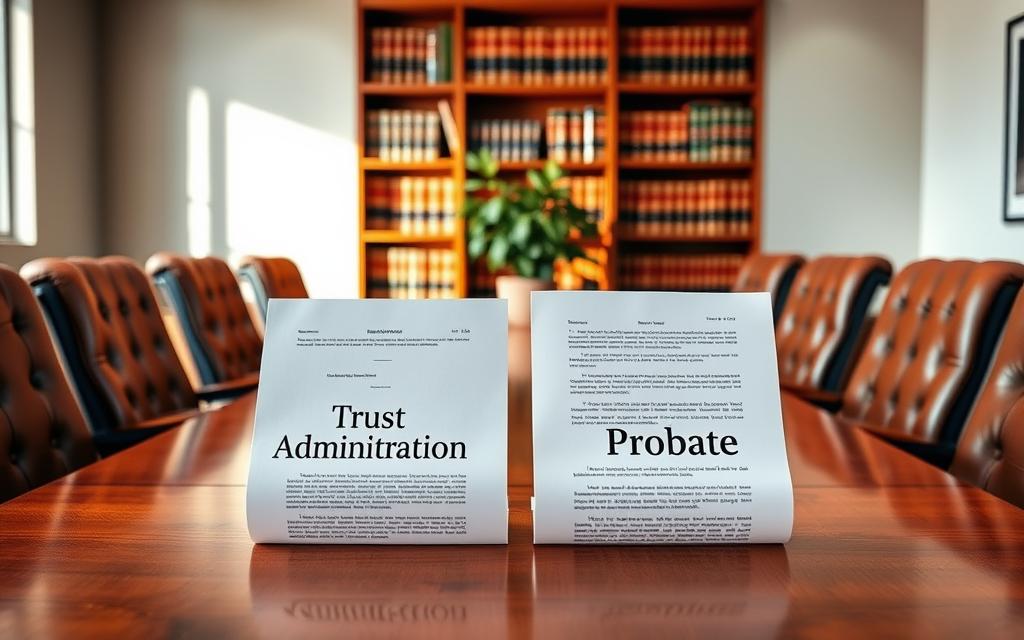
Estate management has two main ways: trust administration and probate. They both aim to share out assets. But, they do it in different ways.
Key Distinctions Between Trust Administration and Probate
- Court Involvement: Probate needs court help, but trust administration is private
- Timeline: Probate takes 9-18 months; trust administration is faster, 6-12 months
- Cost: Probate is pricier because of court fees and legal issues
Situations Requiring Probate
Even with a trust, some situations need probate:
- Assets not moved to the trust before death
- New assets not in the trust’s name
- Unpaid financial claims against the estate
Advantages of Trusts Over Wills
| Trust Advantages | Probate Limitations |
|---|---|
| Maintains family privacy | Public court records |
| Faster asset distribution | Long court processes |
| Lower overall costs | Higher legal and court expenses |
| Flexible management | Rigid legal procedures |
Probate law specialists suggest making estate plans carefully. Proper trust funding and planning can avoid legal issues. It also makes sharing out assets smoother.
The Role of Executors vs. Trustees
Understanding the difference between executors and trustees is key in estate management. These roles are vital and need a deep grasp of fiduciary responsibility. Each role has its own duties and legal duties.
Differences Between Executors and Trustees
Executors and trustees have different jobs in estate planning. An executor deals with assets through probate. A trustee manages assets in a trust. The main differences are:
- Executors work under court supervision
- Trustees operate more independently
- Executors handle will-based asset distribution
- Trustees manage ongoing trust assets
Responsibilities of Each Role
Each role has specific duties that need careful attention. Fiduciary responsibility counsel stresses the importance of understanding these duties:
| Executor Responsibilities | Trustee Responsibilities |
|---|---|
| File will with probate court | Manage trust investments |
| Obtain letters testamentary | Maintain detailed financial records |
| Pay estate debts and taxes | Distribute assets per trust terms |
When to Consult Legal Counsel
Seeking legal advice is important in complex estate cases. You should get help when:
- Facing complicated asset structures
- Encountering beneficiary disputes
- Dealing with tax-related challenges
- Uncertain about legal procedures
Getting an attorney is a smart move. It protects both the fiduciary and beneficiaries during estate administration.
Case Studies of Successful Trust Administration
Trust administration attorneys help with complex estate settlements. They turn tough situations into smooth, successful ones.
Examples of Smooth Settlements
Recently, a trust attorney worked on a complex estate. It had rental properties and many investment accounts. The steps were:
- Verifying beneficiary designations
- Getting precise property appraisals
- Coordinating tax-efficient distributions
- Providing regular 30-day updates
This led to a smooth settlement. It kept family relationships strong and avoided tax penalties.
Lessons from Complicated Cases
Some trust administration cases need special legal skills. Challenging situations often include:
- Blended family inheritance disputes
- Ambiguous trust language interpretations
- Complex business asset distributions
- Intricate tax compliance requirements
How Attorneys Facilitated Resolution
Trust administration attorneys are very helpful. They:
- Give clear legal advice
- Help solve conflicts between beneficiaries
- Find and fix procedural errors
- Ask for court help when needed
These examples show how important trust administration attorneys are. They make sure estate settlements are smooth and follow the law.
The Importance of Communication
Good communication is key to managing trusts well. Successor trustee advice says it’s important to talk clearly and often. This helps avoid problems and makes settling estates easier.
Keeping Beneficiaries Informed
Keeping in touch needs a plan. Successor trustee advice suggests a few steps:
- Set a regular time to talk (like every month)
- Use simple words in your messages
- Share financial details
- Tell them what’s happening and what’s next
Handling Difficult Conversations
Talking about tough topics needs care and skill. Trustees should:
- Listen to how people feel
- Stick to facts from the trust
- Offer to talk face-to-face or by phone
- Stay calm and fair
Managing Beneficiary Expectations
Being clear from the start helps avoid fights. Successor trustee guidance advises:
- Explain how the trust will be handled
- Give a rough idea of when things will happen
- Talk about possible delays
- Set limits on how often you’ll talk
Trust lawyers can help a lot with talking to people. They make sure everyone knows what’s going on and keeps the peace.
Strategies for Efficient Trust Administration
Managing trust assets well needs smart planning and action. Trustees have big jobs that need careful work and quick thinking. A good plan can make trust management easier.
Good trust management has many important parts. They all work together for smooth and correct work.
Creating a Detailed Plan
Starting a trust plan means getting organized well. Important steps include:
- Setting up a clear timeline for important steps
- Making a detailed to-do list
- Finding and solving problems early
- Organizing documents well
- Opening a special bank account for the trust
Using Technology for Management
Today’s trust management uses new tech to work better:
- Systems for managing documents
- Safe cloud storage
- Spreadsheets for tracking money
- Software for estate management
- Safe ways to talk and share info
Leveraging Professional Networks
Working with experts makes trust management better. Trustees should team up with:
- Trust lawyers with lots of experience
- Public accountants who are certified
- Financial advisors
- Real estate experts
- Specialists for valuing assets
Getting help from pros makes trust management easier and more organized.
Resources for Further Assistance
Trust administration can be hard to understand. But, many resources are available to help. They support estate planning lawyers and those who benefit from trusts.
Looking for help? There are many places to find trust administration support:
Professional Associations for Attorneys
Estate planning lawyers can learn a lot from professional groups:
- American College of Trust and Estate Counsel (ACTEC)
- National Academy of Elder Law Attorneys (NAELA)
- State Bar Association Trust and Estate Sections
- Local Estate Planning Councils
Educational Materials on Trusts
There are many resources to learn about trusts:
- The Trustee’s Legal Companion book
- American Bar Association online resources
- Professional webinars and educational seminars
- State-specific trust administration guides
Support Groups for Beneficiaries
It’s important to have emotional and practical support:
- Grief support networks
- Family mediation services
- Financial counseling for inherited assets
- Professional estate planning lawyers consultation groups
While these resources are helpful, they can’t replace the advice of estate planning lawyers. Each trust situation is different and needs its own guidance.
Final Thoughts on Trust Administration
Trust administration needs careful planning and expert help. Lawyers for trusts are key in managing estate settlements. They help families keep their loved one’s legacy safe and secure.
Planning your estate early is very important. It helps protect your family’s future. Working with trust lawyers early can make things smoother and less stressful.
Legal experts are very valuable. They do more than just papers. They give advice, avoid mistakes, and offer support during tough times.
Good trust administration makes transitions smooth and respectful. With the right lawyers, families can handle legal issues with confidence. This makes protecting family wealth a meaningful process.